Showing posts with label the genius of cheap. Show all posts

Sunday, May 15, 2011

Old Sci-Fi Films

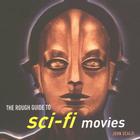
When I was in Seattle, I picked up the book The Rough Guide to Sci-Fi Movies.

Naturally, that's led to my watching some sci-fi films I hadn't seen before.  (That was the whole point.)  Here are some of them.

La Jetee

This French short was the basis of Terry Gilliam's great Twelve Monkeys, and just as Gilliam is a wildly original filmmaker, director Chris Marker made some original aesthetic choices as well.  Most notably, this motion picture has no moving pictures, just a collage of stills with an audio track (mostly narration).  Yet it works, and the choice actually seems like a shrewd way for an indie filmmaker to work around the issue of special effects.  Here it is on youtube with English narration:


Colossus:  The Forbin Project

"Colossus" is the story of the US military's handing control of its nuclear arsenal to a massive, artificially intelligent computer, Colossus, and like many stories' beginnings, "it seemed like a good idea at the time."  The story is compelling, complex, and clearly a precursor to 1983's WarGames, though much darker.  Conveniently, it, too, is available in its entirety on youtube:


Fahrenheit 451

Given that this film is based on a Ray Bradbury book and directed by Francois Truffaut, it seems set up to be great.  It's not.  It fails on so many levels I stopped watching after 30 minutes.  First, the tone and cinematography of this one are really terrible.  I've never watched Truffaut's films, though I've always heard great things about them.  But the staging of the opening sequence seemed so amateurish that I'm not in a rush. And putting the story on film exposed the absurdity of the book.  I mean, if you're going to burn about 50 books in a dry environment, you don't need a flamethrower.  A single match will do just fine.

Soylent Green

I approached this film well aware of its notorious ending.  What I wasn't prepared for was what a prescient, chilling presentation it is of the future (i.e., now present day).  Set in 2022, the world swelters under the effects of global warming.  Food is scarce.  Unemployment is rampant.  The masses struggle to survive; the wealthy are unaffected.  Does this sound familiar?  Watch this film.  Watch it again!

Since "Star Wars," sci-fi has been my favorite genre, but lately, I find it uniquely relevant to our lives.  Only sci-fi can capture the relentless effects of science and technology on our lives.  These effects don't just change our external realities; they change our consciousness, too, as human interaction evolves away from face-to-face contact, toward web surfing.  Unfortunately, it appears our mastery of science has far outpaced our ability to use it wisely.

Friday, April 18, 2008

Thoughts on public transit

As I whined earlier, public transit is really expensive here, and that's just within the city. If you have to take the commuter train to the suburbs, that can be $15 per round trip. How in the hell is anyone supposed to afford that? Though I'd prefer to use public transit, this cost actually creates an incentive to drive if I know I'm going somewhere I can park for free.

I always found it odd that public transit is something one has to pay for. I think public transit should be public the way the public libarary is--that is, free. As curbing greenhouse gases becomes a greater and greater concern, this approach seems more and more appropriate. Cities could pay for the transit by gathering money from the drivers though gas taxes, fees, parking fines, parking meters, etc.

One of the things about charging for the public transit is that doing so put an enormous burden on the transit agencies. Public transit exists to move people around. But much of their equipment and personnel are there to gather fares. If transit were free, you wouldn't have: turnstiles, token machines, drop boxes on buses, people in booths sitting top of the money. Most of the equipment and people that public transit users interact with are involved in gathering fares, not transporting people. One thing is certain; a lot of the fares gathered goes to the continued gathering of fares. I would love to know what the typical proportion is; it must be significant.

Also, the gathering of fares makes the transit system inefficient as well. On a busy bus route, each stop is slowed because every new passenger has to line up and pay the fare. If there were no fares, the bus would stop, both doors would open, people would get out, then people would get on. Much faster.

These are the things I think about.

Well, today, I'm getting a bike, so I'm looking forward to avoid transit fares the old-fashioned way.

Monday, March 31, 2008

Today's (not) the deadline

Speaking of saving money and as I've posted, today's the deadline for enrolling in Access to Care. Get on it, crazy people!

Update: I just learned that the enrollment deadline has been extended to the end of May and the coverage deadline has been extended to November 14th. That's two more months to procrastinate, crazy people.

Our experience with Vonage

If you know me, you know I'm always looking to save a buck. And you know I'm not a big fan of the cellphone.* So, when we moved into our Toronto apartment, I was looking for the best deal on a landline. I went with Vonage. I'm writing to recommend it if you have a landline, especially if you've also got a cellphone and high-speed internet.

For $20 a month, I get a package from Vonage that's worth at least $60, maybe $100. In the US, this package costs $15. It includes:
500 minutes anywhere in the US or Canada (after that 3.2 cents/minute)
caller-id
voice mail
call waiting
Any incoming calls or calls placed to other Vonage customers don't count against your 500, so we were in no danger of going over 500. But if you need more, you can get unlimited minutes for $40/month (only $25 in the US).

This is a great smoking deal, and that's why I'm posting about it. I highly recommend it over traditional landline providers. Really the only disadvantage Vonage has compared to the others is, if you lose power, you lose your phone line. Generally, that's never been an issue, though, and as I said, if you have a cellphone it really shouldn't matter.

The main thing you need is a high-speed internet connection, typically DSL or a cable modem. They'll send you an adapter to plug into your router or modem which will work with any regular phone.

But there's another thing. Vonage offers what they call a V-phone, which allows you to make calls through any PC on the web. That would by-pass the router and adapter all together. Which means, with New Orleans' free wifi, one conceivably could get a phone line for just $15 a month without the overhead of an internet connection. That's hard to beat! (Though, the city's free service isn't the greatest. But any calls you receive while not on-line would just go to your voicemail, which you can also check over the web.)

OK, I hope this helps you save some dough if you've got a landline. If you should sign up with Vonage and mention that I referred you, I'll get two months free. (Let me know if you need my phone number.) Though the purpose of this post is to tell you a great way to possibly save money, not sell you on something.

Good luck! And let me know how that goes.
___________________________
*I'm not a big fan of the cellphone, until I return to Louisiana and use my dad's, which was once mine but given to him for Christmas once I tired of it. (Merry Christmas, Dad.)